
Improve Posture Pilates at Home
An 8-minute Pilates flow to fix posture and undo the damage that sitting does to your spine. Back strengthening, deep core work, bird dog, and a closing mermaid stretch. Short, focused, and genuinely effective.
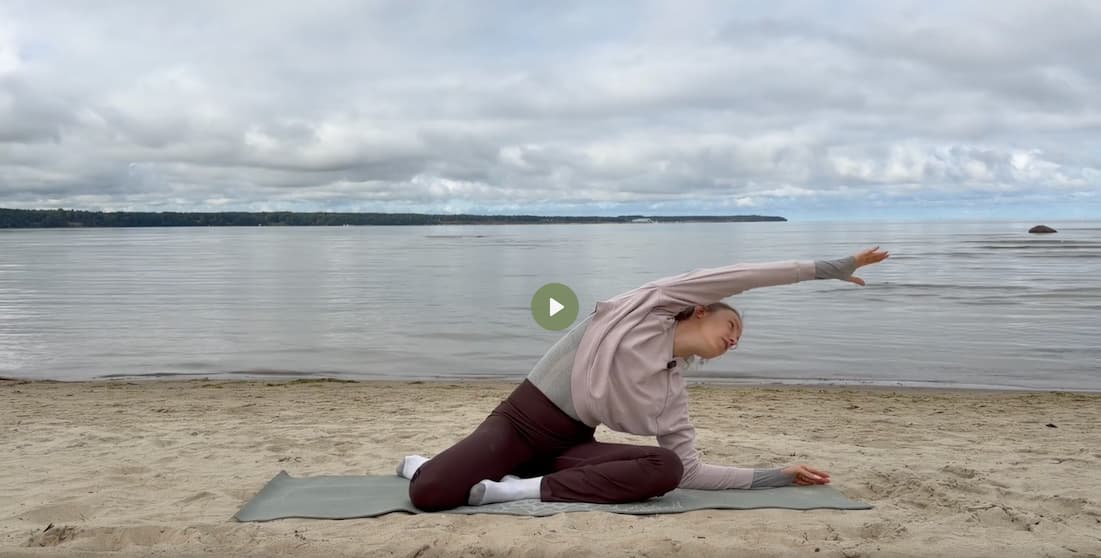
Please listen to your body and move at your own pace. In Pilates, we never work through pain. If something doesn’t feel right, ease off, modify, or simply skip it. If you’re pregnant, postpartum, or have any injuries or health concerns, check with your doctor before joining in. Every body is different. Take what feels good, leave what doesn’t, and rest whenever you need to. 🌿
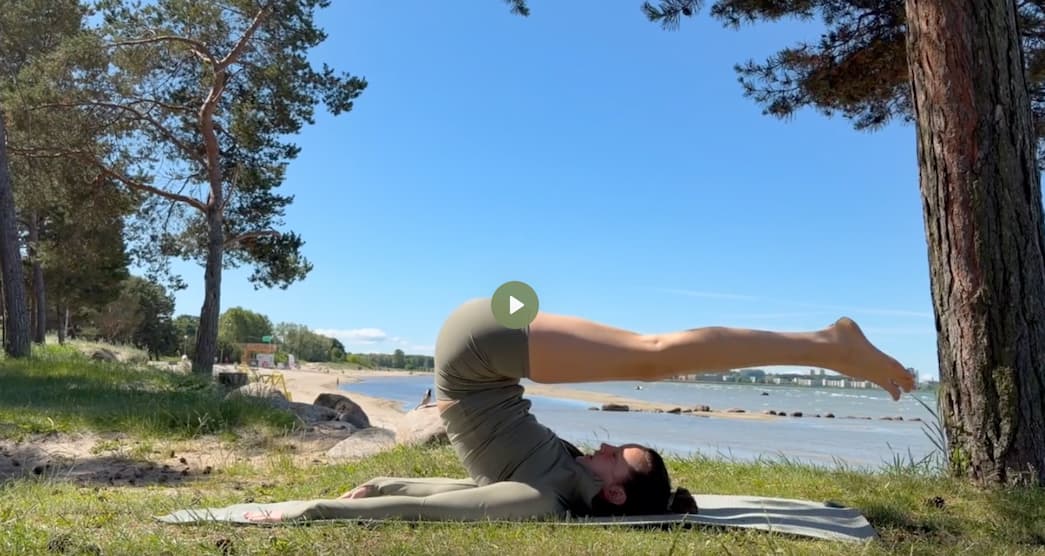
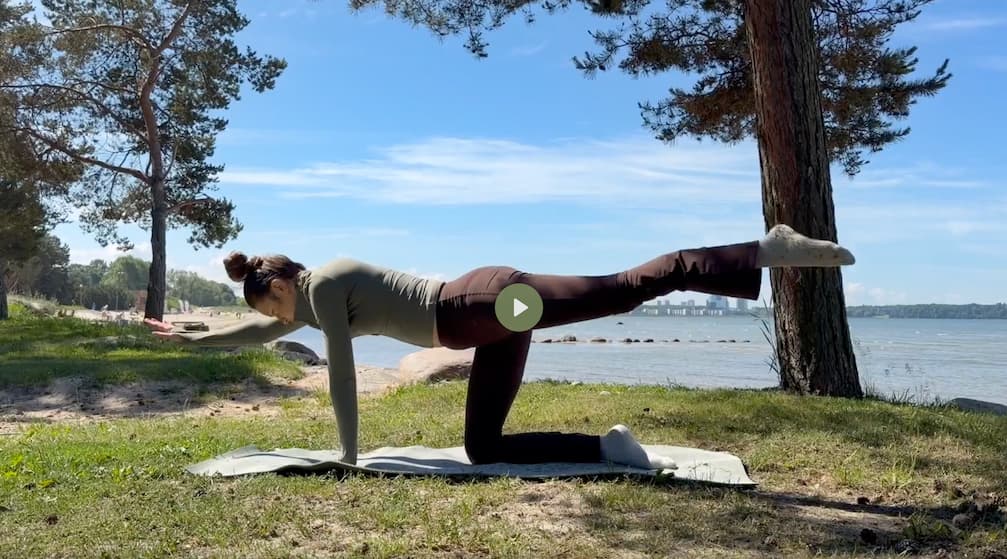
Eight minutes on the sand. The sound of the sea. And a practice that starts undoing what hours of sitting does to your posture from the very first breath.
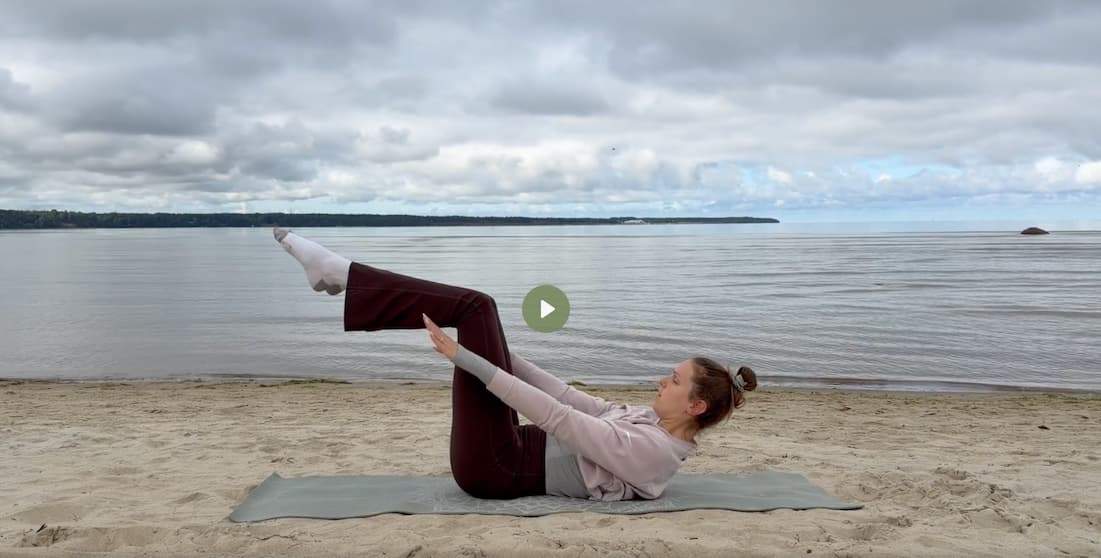
This short Pilates flow is designed specifically to fix posture, opening the chest, strengthening the upper and lower back, activating the deep core, and restoring the natural alignment your spine is supposed to have. It moves through slow breathing and stretching to open, into targeted back and core exercises, bird dog for spinal stability, and closes with a long mermaid stretch that leaves you feeling open, tall, and completely reset.
Eight minutes. That’s all it takes to start standing differently.
🧘♀️ In this class, you’ll:
- Ease in with slow breathing to open your chest and spine
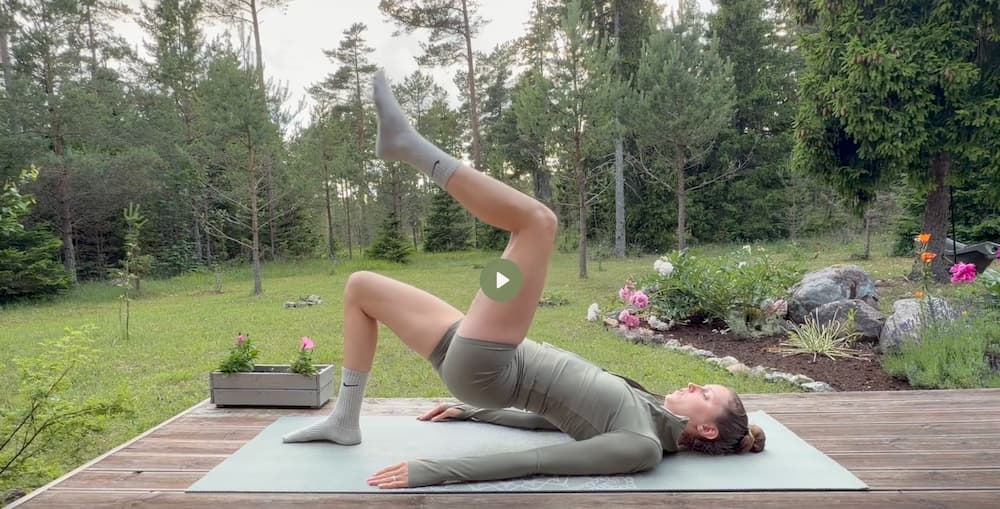
- Strengthen your upper and lower back with targeted exercises
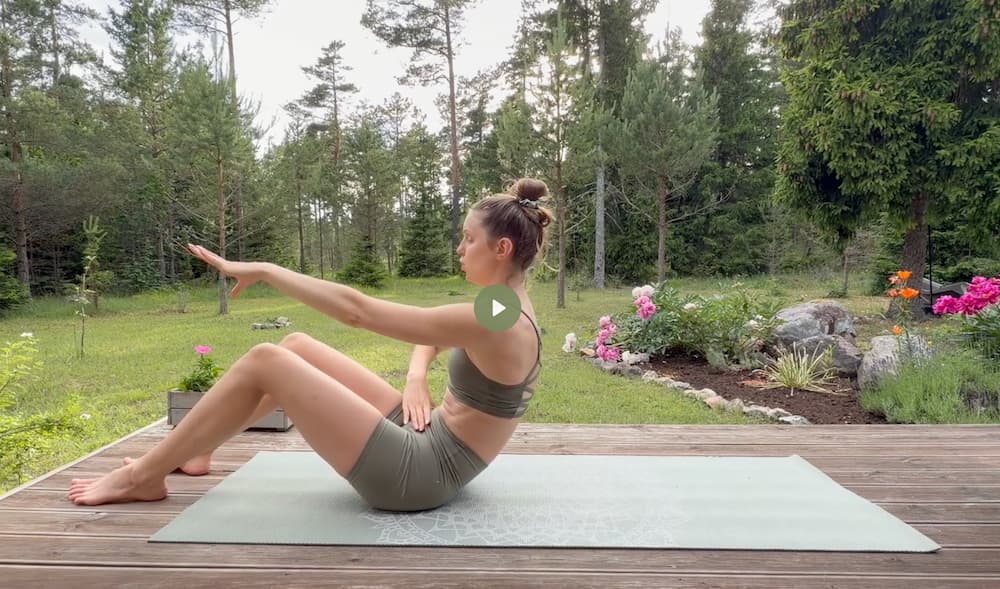
- Activate your deep core for spinal support and stability
- Build postural control with bird dog
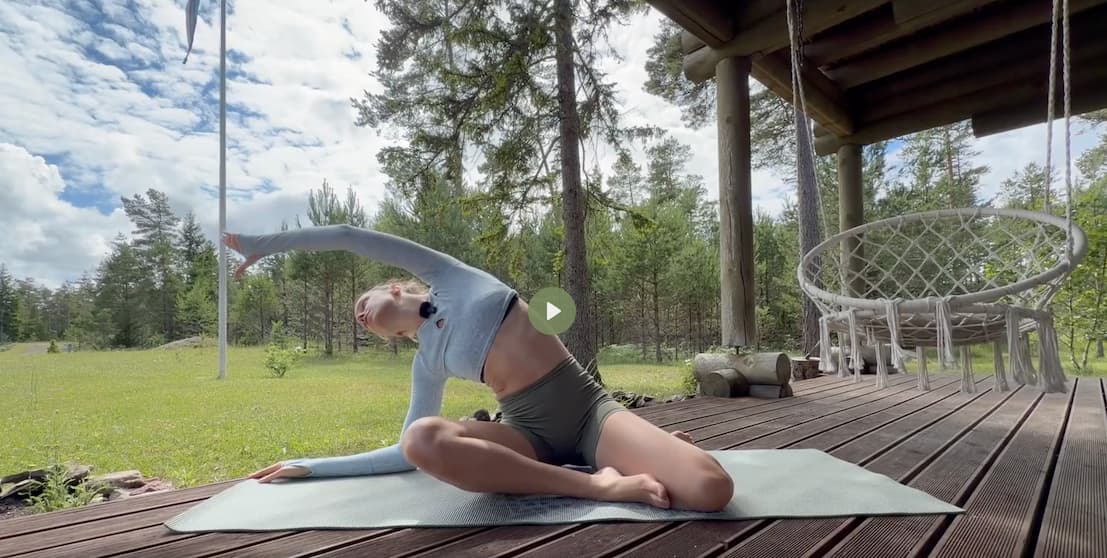
- Lengthen and open your whole side body with the mermaid stretch
- Finish feeling taller, more open, and genuinely aligned
How Pilates Helps Fix Posture
Pilates works on posture differently from most other forms of exercise, and that difference is what makes it so effective.
Most conventional workouts train muscles in isolation, focusing on strength or flexibility separately. Pilates trains the deep stabilising muscles, the ones that hold your spine in alignment and keep your posture upright automatically, without you having to think about it. When these muscles are strong and responsive, good posture stops being something you have to consciously maintain and starts being how you naturally stand and move.
Pilates also addresses the root causes of poor posture rather than just the symptoms. It releases the tight muscles that pull your body forward, your chest, your hip flexors, your neck, while strengthening the weak ones that have stopped doing their job, your deep core, your upper back, your glutes. That combination of releasing and strengthening is what creates lasting postural change.
And because Pilates is built around breath and body awareness, it teaches you to notice when you’re out of alignment, which is the first step toward actually changing it.
Why Posture Suffers and Why It Matters
Most of us spend hours every day in positions our bodies were never designed for. Sitting at a desk, looking at a phone, hunching over a laptop, all of it pulls the body forward. The chest closes in, the shoulders round, the head creeps forward of the spine, and the muscles that are supposed to hold you upright gradually switch off from underuse.
Over time, what starts as mild slouching becomes a fixed pattern. Your muscles adapt to the position you spend the most time in, and holding yourself upright starts to feel effortful rather than natural.
The effects go beyond how you look. Poor posture compresses the spine, strains the muscles of the neck and upper back, tightens the hip flexors, and contributes to the kind of chronic, low-grade pain that becomes so familiar you stop noticing it. Tension headaches, lower back ache, a stiff neck at the end of the day, these are often posture problems in disguise.
The good news is that your body responds quickly to the right kind of movement. And Pilates is one of the most effective tools there is for fixing posture from the inside out.
What’s in This Class and Why
Every element of this flow is chosen to directly address the postural patterns that modern life creates.
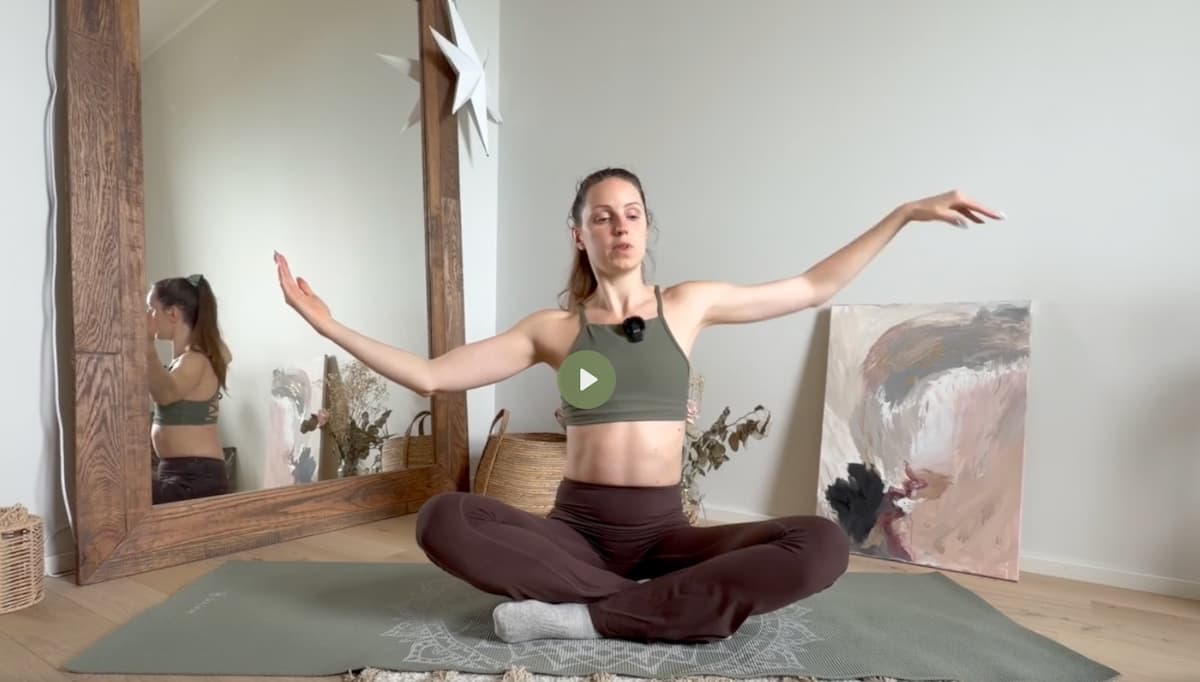
Slow breathing and stretching to open — Beginning with breath is intentional. Slow, deep breathing expands the chest and ribcage, counteracting the compression that comes from rounding forward all day. Combined with gentle stretching, it starts releasing tight muscles before the more active work begins, so your body is ready to move well rather than just moving.
Back exercises — The muscles of your upper and lower back are often the weakest link in posture. When they’re strong, they hold your spine upright effortlessly. When they’re weak, your body collapses forward. Targeted back strengthening is one of the most direct ways to fix posture and one of the most overlooked in general fitness.
Deep core work — Your deep core and your posture are inseparable. The transverse abdominis and multifidus, the deepest layer of your core, wrap around your spine and hold it in its natural position. Without them working properly, no amount of back strengthening will create lasting postural change. Activating them here gives your spine the internal support it needs.
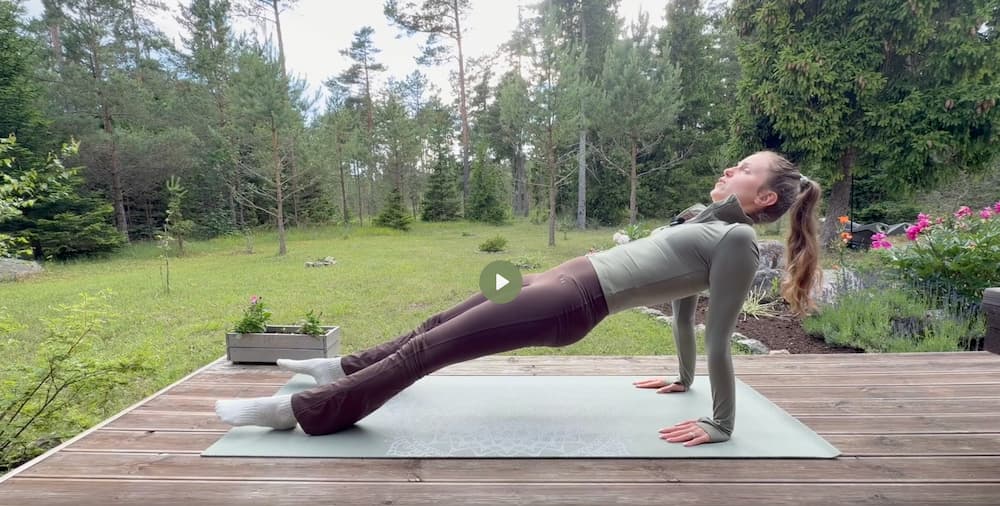
Bird dog — One of the most effective exercises for spinal stability and postural control. By extending opposite arm and leg while keeping your spine completely neutral, bird dog trains your core and back to work together to hold alignment under load, exactly what good posture requires in real life.
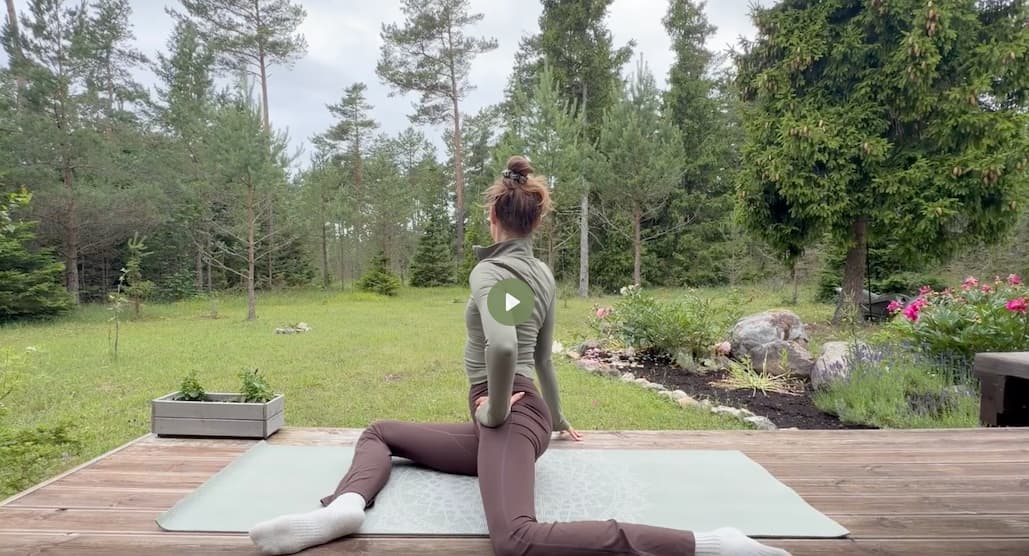
Mermaid stretch to close — The mermaid stretch lengthens the entire side body, the lats, the obliques, the intercostals between the ribs, which are often shortened and tight from poor posture. Finishing here creates length and openness through the whole torso, leaving your spine feeling tall and your body feeling genuinely free.
Benefits of This Flow for Posture
This class targets the specific muscles and movement patterns that fix posture and keep it that way, in just eight minutes.
Regular practice can help you:
- Strengthen the back and core muscles that hold you upright
- Release the chest and shoulder tightness that pulls you forward
- Correct rounded shoulders and forward head posture
- Reduce neck tension, upper back pain, and postural headaches
- Stand and sit taller without having to think about it
- Build the body awareness that makes good posture automatic
Pilates vs Other Approaches to Fixing Posture
There are plenty of approaches to posture correction, physiotherapy, chiropractic adjustments, ergonomic changes, yoga. All of them have value. But Pilates sits in a unique position because of what it trains and how.
Chiropractic and physiotherapy are excellent for addressing acute pain and specific structural issues, but they work on the body passively. Pilates builds the muscular strength and body awareness that keeps you out of the positions that caused the problem in the first place.
Yoga improves flexibility and creates body awareness, but its focus is broader. Pilates targets the deep stabilising muscles specifically, the ones responsible for spinal alignment and postural control, with a precision that makes it particularly effective for fixing posture long term.
Ergonomic changes help enormously, a well-set-up workspace reduces the strain your body is under during the day. But ergonomics manage the problem; Pilates addresses it. The two together deliver the best results.
Can This Help With Tech Neck and Headaches?
Yes, and this is one of the most direct ways Pilates can make a difference to how you feel day to day.
Tech neck — the forward head posture that develops from looking down at screens, is one of the most common postural problems of modern life, and one of the most consequential. For every inch your head moves forward of your spine, the effective weight it places on your neck increases significantly. A head that weighs around five kilograms in neutral alignment can feel like three or four times that to the muscles and joints of your neck and upper back when it’s consistently held forward.
The result is chronic tension in the neck, upper trapezius, and shoulders, muscles that are working overtime just to hold your head up. That tension is one of the leading causes of tension headaches, and it also contributes to jaw clenching, shoulder pain, and the general feeling of carrying the weight of the world across your upper back.
This class addresses tech neck in several ways:
The chest opening and stretching at the start release the tight pectoral muscles that pull your shoulders forward and contribute to the rounded upper back that drives the head forward in the first place. When your chest opens, your shoulders naturally sit further back, and your head follows.
The back strengthening exercises build the upper back muscles — the rhomboids, the lower trapezius, the thoracic extensors — that are responsible for holding your shoulders back and your spine upright. When these muscles are strong, they counteract the forward pull of tight chest muscles and keep your head where it belongs — over your spine, not in front of it.
Bird dog trains your spine to maintain a neutral position under load, which includes keeping your cervical spine, your neck, long and aligned rather than craning forward. The postural control it builds carries directly into how you hold your head when you’re sitting at a desk or looking at a screen.
The deep core activation matters for neck posture more than most people realise. Your deep core, your thoracic spine, and your cervical spine are all part of the same postural chain. When your core is supporting your spine properly, the load is distributed evenly through your whole system, and your neck doesn’t have to work as hard to hold everything up.
The mermaid stretch creates length through the lateral neck and upper shoulder, an area that holds an enormous amount of tension in people who spend long hours at screens, and leaves the whole upper body feeling more open and decompressed.
For headaches specifically, if yours are tension headaches driven by neck and upper back tightness, consistent practice of this class can make a meaningful difference. Many people find that as their posture improves and the chronic tension in their neck and shoulders reduces, the frequency and intensity of their headaches reduce with it.
If your headaches are frequent, severe, or accompanied by other symptoms, always check with your doctor to rule out other causes before attributing them to posture alone.
Will This Help With Lower Back Pain?
For many people, yes, and this particular class is well suited to it because of the specific combination of exercises it includes.
Lower back pain that comes from sitting and poor posture is rarely a lower back problem in isolation. It’s almost always the result of a chain of issues working together,a deep core that isn’t supporting the spine, hip flexors that are tight and pulling on the lumbar vertebrae, glutes that have switched off, and an upper back that’s rounded forward and shifting the load downward. Your lower back ends up compensating for all of it, and eventually it starts to complain.
This class addresses that chain directly.
The deep core work activates the muscles that are supposed to be supporting your spine in the first place. When your transverse abdominis and multifidus are switched on and working properly, your lower back stops being the primary load-bearer, and the tension and pain that comes from that overload starts to ease.
The back exercises strengthen the muscles along your entire spine, including the lower back, so they can do their job without fatiguing quickly or going into protective spasm.
Bird dog is one of the most effective exercises for lower back health there is. By training your core and back to work together to maintain a neutral spine while your limbs move, it builds exactly the kind of functional stability that protects your lower back in everyday life, when you’re lifting, reaching, walking, or simply sitting for long periods.
The breathing and stretching at the start release the protective tension your nervous system holds around a sore or vulnerable lower back. Chronic lower back pain almost always has a nervous system component, the body guards the area long after the original cause has healed. Slow breath and gentle movement help signal that it’s safe to let go.
The mermaid stretch at the end lengthens the side body and creates space through the lateral spine, which gently decompresses the lumbar vertebrae and leaves your lower back feeling lighter and less compressed than when you started.
Done consistently, this class works on the root causes of posture-related lower back pain rather than just managing the symptoms. Many people find that a few weeks of daily practice significantly reduces the frequency and intensity of lower back discomfort, and for some it disappears altogether.
As always, if your lower back pain is severe, has come on suddenly, or is accompanied by symptoms like numbness, tingling, or pain radiating down your leg, please check with your doctor or physiotherapist before starting. And never push through pain in class. Modify, rest, or skip anything that doesn’t feel right for your body that day.
How Long Before You Notice a Difference?
Faster than most people expect.
Many people feel taller and more open immediately after their first session, that’s the effect of releasing tight muscles and activating ones that have been switched off. It’s not just a feeling. Your body genuinely holds itself differently after even a short, targeted practice like this one.
Visible, lasting changes in posture typically take four to six weeks of consistent practice. That’s when the deeper postural muscles have strengthened enough to hold alignment automatically, when good posture stops being an effort and starts being your default.
The key is consistency. Eight minutes every day will always deliver more than a longer session done occasionally.
Who This Class Is For?
This class is for anyone who wants to fix their posture and feel the difference in how they stand, move, and carry themselves every day.
It’s especially good if you:
- Sit at a desk for long hours and feel it in your back, neck, or shoulders
- Have noticed your posture rounding or collapsing forward
- Experience tension headaches or upper back pain connected to screen use
- Want a short, effective daily habit that creates real postural change
- Are new to Pilates and want a gentle, focused place to start
- Want something you can do every morning before the day begins
Take a deep breath, you deserve this!
READY TO JOIN THE MANGO FAMILY?