
Deep Core Pilates at Home
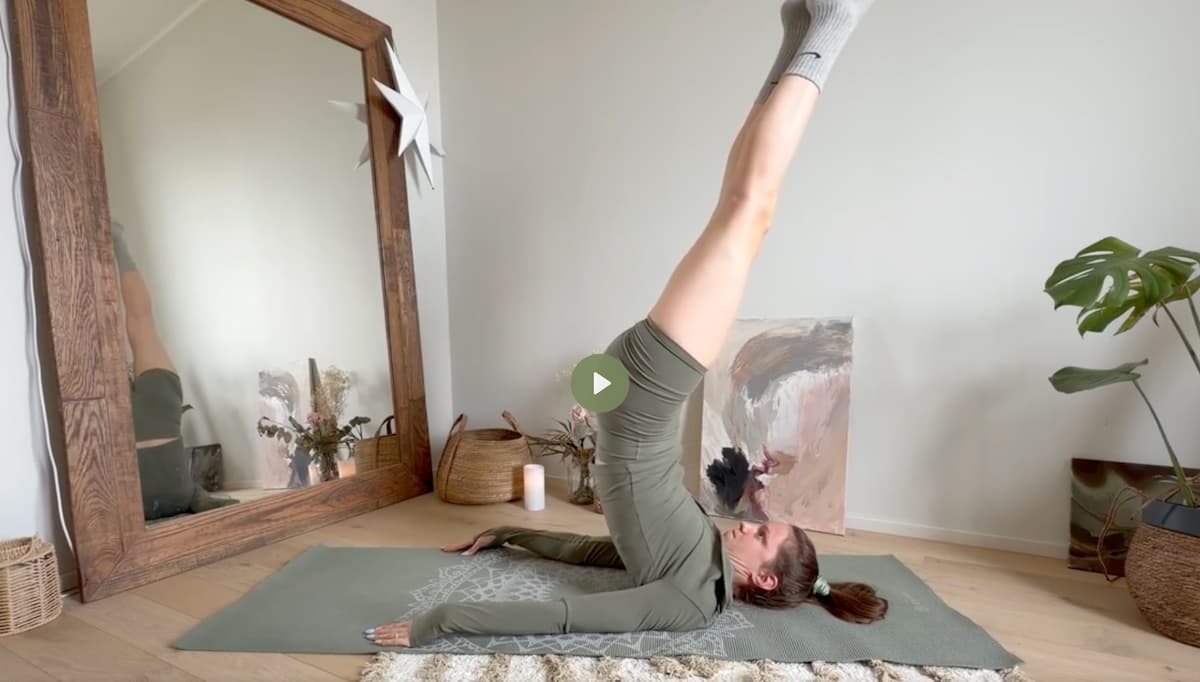
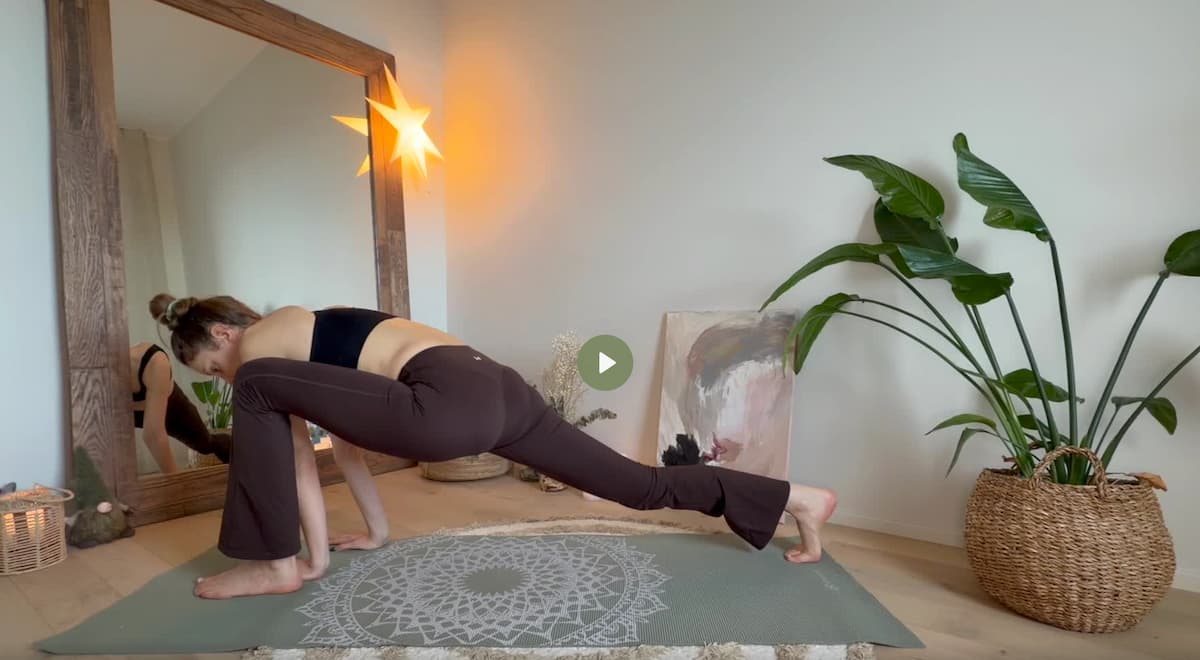
An 18-minute deep core Pilates class you can do at home without equipment. Strengthen the muscles that support your spine, improve your posture, and build the kind of core stability that carries over into everything you do. + an unexpected guest!
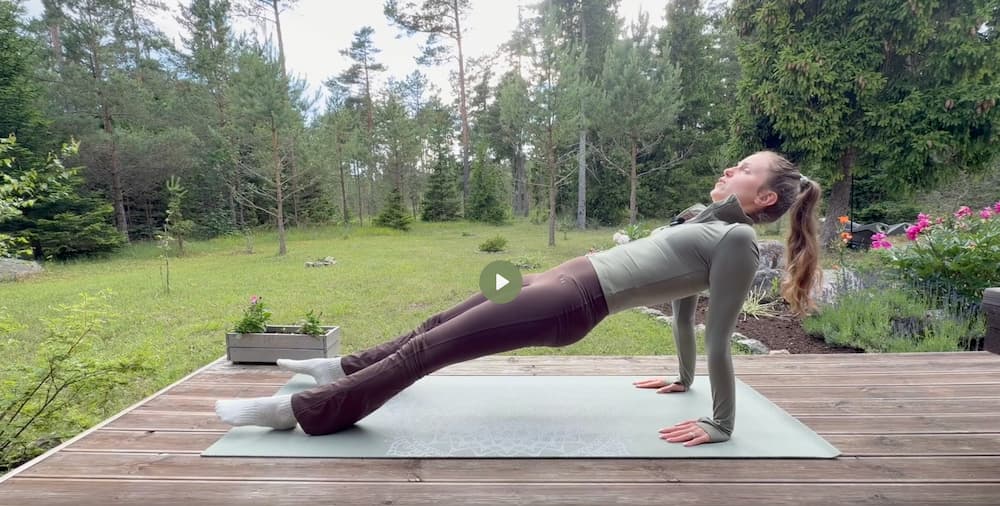
Please listen to your body and move at your own pace. In Pilates, we never work through pain. If something doesn’t feel right, ease off, modify, or simply skip it. If you’re pregnant, postpartum, or have any injuries or health concerns, check with your doctor before joining in. Every body is different. Take what feels good, leave what doesn’t, and rest whenever you need to. 🌿
Your deep core is the foundation of everything. Not the surface muscles you feel when you do a crunch. The deeper layer that wraps around your spine, stabilises your pelvis, and makes every other movement in your body more efficient and controlled.
This 18-minute class gets straight to work on exactly that. Clear, focused exercises that target your transverse abdominis, pelvic floor, and deep stabilisers with guidance on how to actually feel them working, not just go through the motions.
🧘♀️ In this class, you’ll:
- Learn how to find and engage your deep core muscles properly
- Strengthen your transverse abdominis, multifidus, and pelvic floor
- Build spinal stability through focused, progressive exercises
- Improve posture and body alignment from the inside out
- Move with more control and body awareness
- Finish feeling stable, strong, and grounded through your centre
What Is the Deep Core and Why Does It Matter?
When most people think about core training, they think about crunches, six-packs, and surface-level ab work. But the deep core is something else entirely.
It’s a group of muscles that sit beneath the ones you can see. The transverse abdominis, the multifidus, the pelvic floor, and the diaphragm. Together they form a natural corset around your spine, providing the stability and support your body needs to move safely, stand tall, and function well in everything from sitting at a desk to lifting something heavy.
When your deep core is weak, other muscles compensate. Your lower back takes on extra load. Your hips and pelvis lose stability. Your posture suffers. And no matter how many surface-level ab exercises you do, nothing quite fixes it, because you’re not addressing the root of the problem.
This class does.
Benefits of Deep Core Training
Training your deep core is one of the most valuable things you can do for your body and one of the most overlooked.
Unlike surface ab work, deep core training creates stability that stays with you all day. You’ll stand taller without thinking about it, move with more control and ease, and feel the difference in your lower back, your posture, and your overall sense of physical groundedness.
Regular deep core training can help you:
Move with more control, efficiency, and confidence
Protect and support your spine in everything you do
Reduce and prevent lower back pain
Improve posture and natural body alignment
Build a stable foundation for all other movement and exercise
Strengthen your pelvic floor and deep stabilising muscles
Why Deep Core Work Feels Different From Regular Ab Training
If you’ve ever finished a core class and thought: I did so many crunches but my back still hurts, this is why.
Surface ab exercises like crunches and sit-ups train the rectus abdominis, the muscle responsible for the six-pack look. They have their place, but they do very little for spinal stability. In fact, done without proper deep core engagement, they can increase compression on the spine and make back issues worse.
Deep core work feels quieter. More internal. You won’t necessarily feel the burn in the same way, but you’ll feel it working somewhere deeper and more central. That feeling of being held together from the inside, of your spine feeling supported and your movement feeling more controlled. Tthat’s your deep core doing its job.
It takes a little practice to find it. This class helps you get there.
Will This Help With Lower Back Pain?
For many people, yes.
Weak deep core muscles are one of the leading contributors to chronic lower back pain. When the muscles that are supposed to stabilise your spine aren’t doing their job, your lower back compensates: taking on load and stress it was never designed to handle alone. Over time, that creates the kind of persistent, nagging back pain that doesn’t seem to respond to stretching or rest.
Strengthening your deep core addresses the root cause. As these muscles get stronger and more responsive, your lower back gets the support it needs and the tension it’s been carrying starts to ease. Many people notice a meaningful reduction in lower back discomfort within a few weeks of consistent practice.
What’s the Difference Between Deep Core and Surface Abs?
Most people think of their core as one thing: the muscles across your stomach that tighten when you do a crunch. But your core is actually a system of layers, and the deepest ones are the most important for how your body functions day to day.
Here’s a simple way to think about it:
Surface abs — the rectus abdominis (the six-pack muscle) and the external obliques — are the muscles closest to the surface. They’re the ones that flex your spine, help you bend forward, and rotate your torso. They respond well to crunches, sit-ups, and most conventional ab exercises. They’re visible, they’re powerful, and they matter — but they’re not the foundation.
Deep core muscles sit beneath that surface layer and work completely differently. The main players are:
- Transverse abdominis — the deepest abdominal muscle, which wraps around your spine like a corset and creates intra-abdominal pressure to stabilise your spine before any movement happens
- Multifidus — a series of small muscles that run along your spine and provide segmental stability between each vertebra
- Pelvic floor — the group of muscles at the base of your pelvis that support your organs, contribute to core stability, and work in coordination with your breath
- Diaphragm — your primary breathing muscle, which works in direct coordination with the other deep core muscles to regulate pressure and support movement
These four muscles work together as a unit: a natural internal support system that switches on automatically before your limbs move, protecting your spine from load and impact. When they’re working well, you feel stable, controlled, and supported from the inside. When they’re not, your body compensates in ways that often show up as lower back pain, poor posture, or a core that feels weak no matter how many crunches you do.
The key difference is this: surface abs move your spine. Deep core muscles stabilise it. Both matter, but for most people the deep core is chronically undertrained because it doesn’t respond to conventional ab exercises. It needs to be trained specifically, intentionally, and with the kind of slow, focused attention that Pilates is built around.
That’s exactly what this class does.
Who This Class Is For?
This class is for anyone who wants to build real core strength from the inside out, not just surface-level ab work, but the deep stability that supports everything else.
It’s especially good if you:
- Experience lower back pain or instability
- Sit for long periods and feel it in your spine and posture
- Have done ab work before but never felt like it translated into real strength
- Are new to deep core training and want clear, guided instruction
- Want to complement your existing Pilates or fitness practice with more targeted core work
Take a deep breath, you deserve this!
READY TO JOIN THE MANGO FAMILY?